
Moody Mutiny or Coup Attempt in Niger? Military Junta Faces Internal Threat from its Own
In
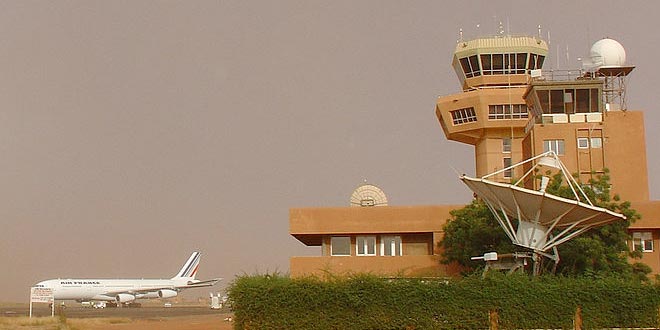
The night between Friday 28 and Saturday 29 August 2026, Niger’s airport in the capital was attacked for the third time this year. Contrary to the previous two times, when the airport was attacked by jihadist groups (IS-SP in January then JNIM in June), this time the attackers came from Niger’s own military.
*******
Moody Mutiny or Coup Attempt in Niger? Military Junta Faces Internal Threat from its Own
The night between Friday 28 and Saturday 29 August 2026, Niger’s airport in the capital was attacked for the third time this year. Contrary to the previous two times, when the airport was attacked by jihadist groups (IS-SP in January then JNIM in June), this time the attackers came from Niger’s own military. Attacks on the three key locations: presidential palace, national radio and television headquarters and airport suggest that this was a coup attempt as these locations tend to form the standard triptych of most coups recorded in the region. Yet, the Nigerien Minister of Defence referred to it as a mood movement in the first communiqué coming from the regime on Saturday evening, explicitly avoiding any reference to a new coup.
Whether this was a coup attempt or a mutiny, this is the first serious attack against the regime by its own forces since it took power in a coup in 2023 deposing President Bazoum with a promise to fight the jihadist groups more efficiently and reclaim Niger’s sovereignty. So far, the junta has not delivered on either of those promises. Fatalities due to jihadist attacks have spiked since the coup in 2023; kidnappings of foreigners have multiplied, including in the capital and various rebel groups in the eastern part of the country have carried out significant attacks against security forces or oil facilities. On Saturday, the Nigerien loyalist forces were forced to ask for help by the Russian Africa Corps to fight back its own colleagues, exemplifying another example of ‘illusory sovereignty’ in the Sahel states.
What do these latest attacks say about the Niger regime’s stability, the AES (Sahel States’ Alliance) durability and their new and old international partnerships in a deeply fragmented West African security landscape?
Three years of grim security statistics
In 2023, before the coup, Niger was faring considerably better than its neighbors in the fight against jihadist groups. A comparatively more professional military, a president who cracked down on corruption, accepted foreign military support, yet proactively and without foreign interference conducted discreet negotiations with local jihadists and initiated more or less successful deradicalization programs seemed to pave the way forward. The claims by the coup plotters in July 2023 about improving the fight against jihadist groups were therefore not as credible as their counterparts in Mali and Burkina Faso, whose security situation was objectively deteriorating at the time of the coups.
Three years later, the junta experiment has both started and ended with a clear negative result. In 2024, Niger “recorded the largest increase in terrorism deaths globally, rising by 94% to a total of 930, reversing previous improvements from 2022. In 2025, it was ranked as the third most impacted country by terrorism in the world, just behind Burkina Faso and before Mali and Nigeria. That same year, the Tillabéri region where the capital is located became the deadliest region across the central Sahel, while new hostage-taking campaigns by both JNIM and IS Sahel resulted in a record number of kidnappings in the country while terrorizing mainly the expat community in Niamey. The two previous attacks on the international airport by first IS Sahel and then JNIM this year, demonstrate the current trend of a shift in the balance of power between the Nigerien security actors and the jihadist groups to the benefit of the latter, whose attacks are becoming more and more daring, in spite of Russian support.
Moody mutineers or organized coup plotters?
This weekend’s mutineers were supposedly young officers from the Dosso, Téra and Tillabéri regions, all affected by numerous attacks by the jihadist organizations during the past few years. The ensuing fights were primarily between the Presidential Guard troops – headed until the coup by its previous commander, General Tchiani – and other sections of the Nigerien armed forces. No official communication has been released by the mutineers, who failed to take complete control over radio and tv stations on Saturday, leading to speculations about the reason behind the attacks. While the Defence Minister’s declaration evoked a mood move (un movement d’humeur), others speak about grievances linked to the growing number of attacks against the security forces, conditions of deployment on the frontline, favoritism, or structural inequalities of treatment between army corps. On the other hand, the mode of operation based on attacks on multiple sites in Niamey, including the presidential palace, gives credence to the possibility of a coup. The two hypotheses may not be mutually exclusive as the intentions of the rebel soldiers may have been adjusted in real time.
During the last coup in 2023, time played in favor of the coup plotters who managed to collect support from ‘big names’ across the defense and security sector against the sitting President over a period of 24h. Yet this time, reinforcements from regions outside of the capital who were called to support the mutineers were either stopped on the way or started too late to arrive in time to influence the outcome of the fight. Instead, the Russian ambassador was clearly content to announce that the Nigerien loyalist forces had asked for operational support from the Africa Corps troops, which were also stationed in airbase 101.
With a little help from my friends
Russian support does seem to have played a decisive role in fighting back the offensive at the airport, with the help of kamikaze drones which hit remaining rebel soldiers hard at Base 101 and precipitated their surrender. This represents a shift from Russia’s previous military role in Niger which hitherto has remained discreet, mainly focused on training, maintenance and intelligence support. Russia is now explicitly and actively engaged in regime protection in favor of the Nigerien junta. The Russian ambassador was also keen to stir up a rumor of possible external support for the mutineers, evoking France’s previous role in the country and thereby further entrenching the division between France and Niger. Italy, which is the last European state to have an active military collaboration with the country, had a few hundred troops stationed at the airport and communicated that they were safe, but refrained from offering any explicit support to either camp.
Nigerien ally Algeria did however communicate support for the regime on Saturday, with Algeria sending four fighter jets, a transport aircraft and an aerial tanker to the 101-air base on Monday, demonstrating the reinforcement of the relationship between Algeria and Niger. Days earlier, Algeria had donated four helicopters along with ammunition and other material to the armed forces. This is a spectacular display of support from a country ordinarily cautious and discreet about the way it interferes with its neighbors’ domestic affairs. Algeria is evidently signaling its concerns for the stability of a region it considers as its backyard and where new players, such as Russia or Libya’s Haftar clan, gain influence. Algeria’s prompt support follows months of warm diplomatic interactions with the Tiani regime resulting in security cooperation and, crucially, partnerships around oil exploitation. Turkey expressed solidarity with Niger and support for the Nigerien people but avoided voicing explicit support to the regime. Noticeably absent from providing any explicit support on the ground was Niger’s AES allies, Mali and Burkina, with the alliance only publishing a supportive declaration late on Saturday evening. This is similar to the situation in April earlier this year, when Mali faced coordinated attacks across the country from JNIM and the Tuareg separatist groups with AES only expressing belated support.
So far, international organizations such as the UN, the EU and the AU have not issued any statement, nor have the two jihadist organizations fighting in the country. Yet, for both JNIM and IS Sahel, the attacks will represent a welcome development: a fragmented military with grievances and divisions is a weaker opponent.
So What?
In the coming weeks, it is highly likely that the Nigerien regime will conduct a purge of the armed forces and the broader security sector to identify and remove suspected mutineers and disloyal officers. Some troops deemed to be loyal may also be moved to the capital to reinforce the protection of the president, leaving gaps in the field for the jihadist organizations to exploit. Divides among the military may widen as the presidential guard dedicated to Tiani’s protection clearly appeared as the main mover during the attempted coup sequence. Cohesion among security forces may thus have been significantly undermined.
Russia’s explicit operational support demonstrates that it wants to play a bigger role in the country, which given the current weakened position of the regime, it will be difficult to refuse. General Tiani is now heavily indebted to those who ensured his survival in power. However, the new support from Algeria also shows that Niger is not going to rely solely on Russia for military collaboration but will deepen its relationship with other actors too. There is also a possibility of Turkey being solicited for more drones, as a means of reinforcing the protection of the regime.
The EU and its member states have, apart from Italy’s statement about its troops, been quiet. Yet, just a day before the attacks, the Belgian Minister of Foreign Affairs was visiting both Burkina Faso and Niger, one of the first high-level visits to the two countries by an EU state. A weakened Niger regime will most likely seek more support from its allies to stay in power, however, there is little chance of the EU being solicited for this, especially not following the European Parliament’s resolution demanding President Bazoum’s release earlier this year, and Burkina Faso’s expulsion of two EU diplomats. There is thus a chance that this development will pull the Nigerien authorities closer to its new allies, Russia, Algeria and Turkey, while further entrenching its authoritarian turn.
(Photo credit: Wikipedia)