
Mali Meltdown: Coordinated Attacks and their Consequences
In
On the 25th of April, coordinated attacks across several major cities with military caserns in Mali were perpetrated by the largest Jihadist group in the region: Jama’at Nusrat al-Islam wal-Muslimin (JNIM), and the Azawad Liberation Front (FLA), the armed Tuareg separatist group.
*******
Mali Meltdown: Coordinated Attacks and their Consequences
On the 25th of April, coordinated attacks across several major cities with military caserns in Mali were perpetrated by the largest Jihadist group in the region: Jama’at Nusrat al-Islam wal-Muslimin (JNIM), and the Azawad Liberation Front (FLA), the armed Tuareg separatist group. The coordination, complexity and the cooperation between the two armed groups were unprecedented in Mali’s history. Attacks against members of the Malian military junta have resulted in the death of the Minister of Defense and allegedly severely injured the Malian National Intelligence Chief. While it is too early to draw conclusions about the immediate outcome, as fighting continues in several locations between the Malian armed forces and their Russian allies on the one side and JNIM and FLA on the other, these developments will have far reaching consequences on local, national and international levels.
Friends with benefits: JNIM & FLA
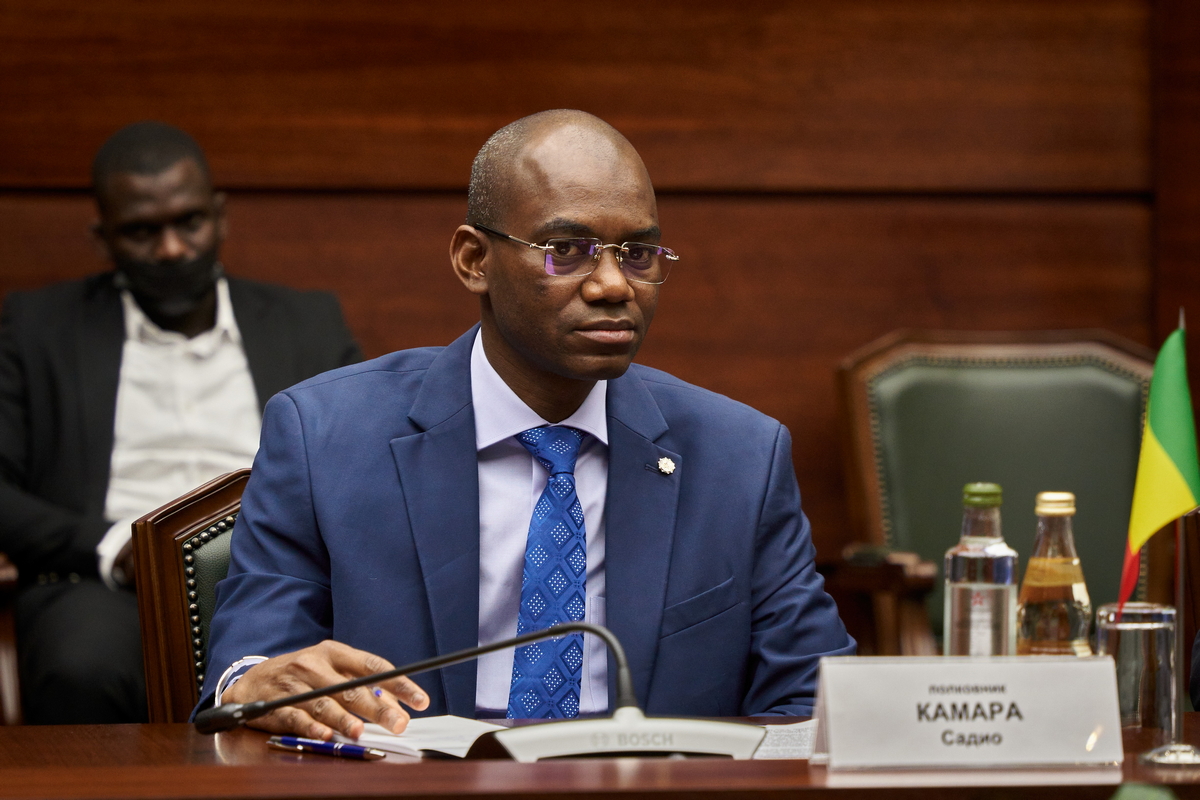
Coordinated attacks took place in several cities throughout the day in Mali on the 25th. The operations began in Bamako with a Vehicle Borne Improvised Explosive Device (VBIED) sent directly to the defense minister, Camara’s residence. Attacks then took place simultaneously in the Bamako suburb of Kati, one of the main military centers of the country, and at various Malian and Russian military positions across the country, notably in Gao, Sévaré, and Kidal. Confirming the current trend of an increase in drone warfare, both sides used drones – including surveillance drones, FPV ‘kamikaze’ drones and support drones, notably the Turkish Bayraktar drones which have made Turkey the main drone exporter to the African continent. Reliable causality figures remain difficult to obtain, but one confirmed incident is the downing of a Russian helicopter by a Man-Portable Air-Defense System (MANPAD), most likely used by the FLA.
The joint attack between JNIM and FLA confirms the military implementation of an alliance which was allegedly negotiated more than a year ago. The coordinated and efficient nature of the attacks in Mali over the past weekend suggest a long and close collaboration and preparation between the two groups, including task division. However, it is not yet clear what their short- and medium-term objectives are, nor the details of the alliance. What is clear, is that the groups managed to overtake Kidal from the Malian armed forces and their Russian allies, the Africa Corps, taking several Malian soldiers hostage, while escorting Russians out of the town after negotiations. Kidal is a symbolically important city in the North of Mali, which was FLA’s stronghold between 2013 and 2023, but which was regained by the Malian army and the Wagner group in the fall of 2023. The retake of the town by the FLA and its partners is therefore both a symbolic and strategic victory, showcasing their military superiority and exposing the Malian regime’s weakness.
Exit Russia?
The coordinated attacks over the weekend have not only damaged the Malian military junta’s status, but also the Russian Africa Corps, the preferred security partner for the Malian regime and the successor of the Wagner group. The images of Russians being escorted out of Kidal after negotiations will surely taint the image of the group as a reliable security partner. This, in combination with the death of the Defence Minister Camara, who long has been seen as the ‘Mr Russia’ of the junta, is likely to have a deeper impact on the relationship between Mali and Russia. Especially so, as divisions within the military regime regarding choice of security partner was already evident since several years, with President Goïta opting for a pivot towards Turkey. There are unverified reports that instructors put forward by the Turkish arms manufacturer CANiK, as early as November 2024, were tasked with training the Malian presidential guard, yet Russia has until now remained the main security partner.
This may change however, considering Camara’s death, the setbacks suffered by Russia, including the ambush in Tinzawaten in 2024 during the Wagner group’s era, which represented the group’s largest defeat in Africa until then. These developments in addition to rumours of tensions between the Malian and Russian forces, could lead to Mali initiating a new pivot more decisively toward Turkey in the future. Turkey being a more comfortable partner, a member of NATO one that could ultimately help bring Mali closer to the West, whose financial, military, and intelligence support seems to be missing. That is, of course if the current regime will stay in power after the recent events, something that remains uncertain at the time of writing. In either case the latest developments will have an impact on other armed actors in the region, and on Mali’s closest regional allies, Niger and Burkina Faso.
Silence is Golden? AES, Islamic State Sahel Province (ISSP) and the Malian regime
Niger and Burkina Faso’s silence following the attacks in Mali provokes questions regarding the state of their defense alliance with Mali. A joint declaration from the Alliance of Sahelian States (AES) on the 25th condemning the attacks and insinuating the implication of external actor was the clearest sign of support so far, although unconfirmed reports about drones from Burkina have circulated on social media. Niger and Burkina Faso had not issued any independent statement as of Monday morning, two days after the attacks started, although many external actors, including the EU, ECOWAS, the US and Russia were quick to condemn the attacks. Given the underlying regime maintenance aspect of the AES (which was put in place following ECOWAS’ threat of a military intervention to restore constitutional order in Niger after its coup in 2023), the current fragilization of the Malian junta is likely to have a destabilizing effect on Goïta’s homologues in Niger and Burkina Faso.
The recent attacks are also likely to have a destabilizing effect on ISSP, which has remained remarkably silent following the attacks. The intensification of the rivalry between JNIM and ISSP was evidenced in clashes in Niger in early April – a first for the two groups, whose rivalry is thus spilling over to new areas. Watching their main rival strike an alliance with another rival and then go on to execute the most complex coordinated attacks in Mali and the region’s history will surely have an impact on ISSP and the future relations between the armed groups. So far, however, the only thing certain is that JNIM has just made a major show of force.
Finally, the Malian regime has remained relatively silent during the recent developments. There was a lack of communication during the first five to six hours following the start of the attacks. On Monday morning only four official statements had been issued by the Malian army, two on the 25th of April followed that evening by a televised address urging citizens to remain calm and refrain from sharing images on social media. Another statement from the Malian government was released later on April 26 confirming Camara’s death, as the news had already been leaked earlier by various international media outlets. Attempts were made to reassure the public and partners despite initial confusion in the media, yet the situation was still unstable on Monday the 27th.
What’s next?
The situation remained chaotic and confused after the weekend’s attacks, with rumors of reported fighting in various locations across the country. A public appearance or statement by President Goïta would be necessary in the short term to assert the regime’s continued hold on power. Yet, even if such appearance does take place, the image of the regime could be damaged or even jeopardized if he appears weak – leading to possible coup attempts. Hence, the military regime’s hold on power is threatened both by its enemies and its own forces.
If the security collaboration between Russia and Mali continues after the recent setbacks, the Russians are likely to relocate to safer positions. Efforts are also likely to be made in order to strengthen the security in Bamako to prevent any security breaches at key infrastructure sites, such as airports and the presidential palace. Yet, if the Malian regime only is able to assert control over Bamako, while the rest of the country is in the hands of JNIM and FLA, its rule will be subject to considerable negotiations resulting in its further weakening.
Regardless of the coming days and weeks’ developments, the alliance between JNIM and FLA, their efficiency and coordination, and the Malian security forces’ lack of intelligence and incapacity to deter the attacks are likely to significantly alter the current security landscape in the Sahel and beyond. It may also draw renewed attention from external actors to a region which has been forgotten among a series of other armed conflicts and crises around the world.
(Photo credit: Wikimedia Commons)