
The Ankara Summit: It’s Trump’s NATO – Europe just lives in it
In
- EU and strategic partners,
- EU strategy and foreign policy,
- Europe in the World,
- European defence / NATO,
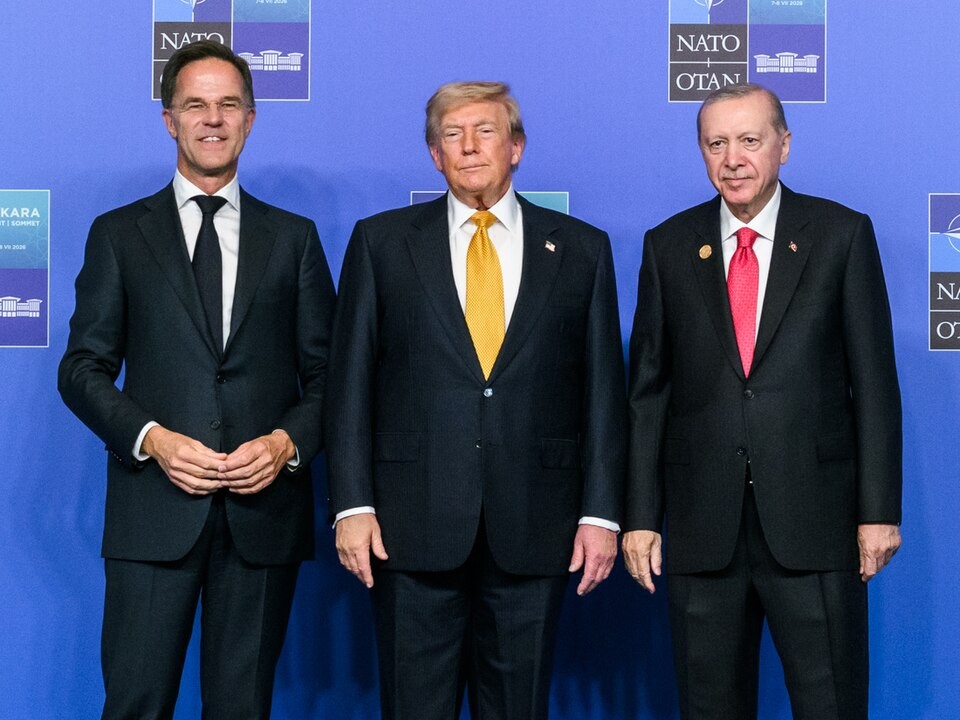
Participants at last week’s NATO summit were presented with brand new revolvers, courtesy of Turkish President Erdogan, and a not so new question: How to safeguard European security with NATO dominated by Donald Trump?
*******
The Ankara Summit: It’s Trump’s NATO – Europe just lives in it
Participants at last week’s NATO summit were presented with brand new revolvers, courtesy of Turkish President Erdogan, and a not so new question: How to safeguard European security with NATO dominated by Donald Trump? As the transatlantic relationship remains the cornerstone of European security and strategic thinking, a new European Security Strategy (ESS) needs to reckon with the fact that NATO has become an organization that is barely able to agree on the lowest common denominator. The European Commission always planned to publish the ESS after the Ankara summit, so what are its implications for European security?
European Relief and Continued Unpredictability
European leaders traveled back from Türkiye with a general sense of relief: US President Donald Trump participated in all proceedings and hailed the “love in the room” after the leaders’ meeting. A summit declaration that expresses allies’ “ironclad commitment to our collective defence under Article 5”, defines Russia as the long-term threat to Euro-Atlantic security that it is and includes strong language in support of Ukraine, including pledges of (European and Canadian) financial assistance to the attacked country, has been agreed. NATO seems to be more united than before. So, have Europeans and NATO Secretary General Mark Rutte found the formula to deal with Trump? Is European security ensured through a reinvigorated transatlantic alliance?
Unfortunately, it is not. A clear-eyed view of Europe’s strategic situation after the NATO summit has to account for two factors. First, Donald Trump still dominates the alliance. The entire summit in Ankara was choreographed with only one goal in mind – making him happy. From a glossy defense industry forum with big investment pledges to crediting him for the increases in defense spending. Second, the US President remains unpredictable. In the matter of 24 hours, he went from berating half of the continent for not supporting his military adventure against Iran, via renewing his aspirations to annex Greenland, to threatening the EU’s fourth biggest member state, Spain, with a trade embargo. Only to in the end claim that the summit had been tremendously successful. Under such circumstances, strategic complacency, whether intellectually in defining Europe’s ends, ways, and means based upon US preferences, or materially in doubling down on the US security guarantee, seems to be misplaced.
Yes, a successful NATO summit is a net positive for European security and should make the drafting of the ESS easier. For it allows policymakers to fall back on established language that reiterates NATO’s importance for Europe’s collective defense and deterrence instead of opening up a debate on defending Europe outside of the alliance’s structures. NATO’s command and control infrastructure remain crucial, and the summit’s outcome clearly lessens concerns that the US might attempt to exert concessions from European allies for using it in a Russia contingency. It also signals to Moscow that the Americans may yet fulfill their alliance commitments should Russia dare to test them. Deterrence is a function of capability and credibility, and in that regard, this summit can be described as a success. European NATO members and Canada demonstrated that they are increasing their capabilities, while the US’s credibility has at least not been further eroded.
European leaders also demonstrated increased willingness to stand up to the US President, for example, over his designs on Greenland or conduct of the war against Iran. These are hopeful signs as they show the continent’s increased ability to formulate common strategic positions and dealing with Trump’s erratic remarks. The more often Europeans formulate common positions vis-à-vis Trump’s (or anyone else’s) demands the more of an automatism this formulation of common positions becomes.
More European capabilities and the reality of burden-shifting also mean more strategic leeway and European self-confidence, as Belgian Defense Minister Theo Francken pointed out. Europe’s willingness to stand up to Trump might have even contributed to the successful outcome of the summit, as the US President has a long-standing appreciation for ‘strength’ and disdain for weakness. Albeit Europeans still mostly agree on what they want to prevent, e.g. Russian threats to the Baltics, a US annexation of Greenland, or a resumption of hostilities between the US and Iran and are less able to formulate a positive vision for European security, agreement on key questions regarding European security is another hopeful sign for the ESS.
‘Made in NATO’ vs. ‘Buy European’
Besides political aspects, the summit focused heavily on the defense industry as Secretary General Mark Rutte hailed over $54 billion in new defense deals. While any increase in Europe’s ability to defend itself will have to include some arms imports, transatlantic defense industry cooperation risks running counter to some of the EU’s most prominent efforts in the security realm: Its SAFE program, the European Commission’s upcoming review of defense procurement rules, and the €131 billion earmarked for defense in the proposal for the EU’s next seven-year budget all focus on strengthening the European defense industry. A credible and capable indigenous armaments industry with strong research and development is paramount to any musings about strategic independence.
As the defense industry is an area where the EU itself is able to act and legislate instead of relying on its member states and as the Commission has taken an increasingly prominent role in coordinating the Europeanization of the defense industry through a dedicated Commissioner, Europeans should be careful not to squander such progress by getting lured into US industry led armament programs. While defense industrial cooperation can help to fill remaining capability gaps in the short term, the global shortages of critical capabilities such as air-defense interceptors in the wake of the Iran War and the US industry’s inability to ramp up production ought to serve as a warning in favor of future European procurement. Past conflicts between EU member states over using European funds to finance the licensed production of US weapons are a cautionary tale that should not be repeated. Consensus around developing a strong European arms industry is a key security interest for the continent as well as a potential bright spot during economically challenging times and should therefore feature prominently in the ESS.
The EU already possesses ways to include non-EU partners in its defense industrial efforts (e.g. Canada’s inclusion in the SAFE scheme) on favorable terms and should formulate the ambition to strengthen such efforts. If NATO labels them as made in the alliance in the aftermath for public relations purposes, all the better. The ESS will have to find a careful balance between ‘Buy European’ and short-term ‘Made in NATO’ defense industrial approaches where they are necessary.
Conclusion
Unpredictable behavior still reigns supreme for the US President. The mere fact that the NATO summit did not end in controversy should not lead to a false sense of security. European leaders would do well to move forward on insulating the security of the continent as much as possible from the whims on the other side of the Atlantic. Prudent strategy recognizes this fact and focuses on increasing European capabilities and strategic independence. This means that the upcoming ESS needs to formulate the EU’s own goals and how it aims to achieve them with or without, sometimes possibly against, the US. A careful balance between European strategic independence and transatlantic cooperation remains the core challenge for drafting a European Security Strategy. While diplomatic language and the relief after the Ankara Summit can cushion some of the hard questions related to the US’s role in European strategy, they cannot paper over the lasting recognition that Europe needs to find a new role in this world that diverges from being America’s most loyal allies. If European decision-makers do not get complacent due to the perceived reiteration of American support, this NATO summit might have made their task a bit easier.
DISCLAIMER
Funded by the European Union (Project 101169280). Views and opinions expressed are however those of the author only and do not necessarily reflect those of the European Union. Neither the European Union nor the granting authority can be held responsible for them.
(Photo credit: The White House, Wikimedia Commons)