
Administered Heroes: How Russia Governs Its Veterans
In
- EU and strategic partners,
- EU strategy and foreign policy,
- Europe in the World,
- European defence / NATO,
- Russia,
Russia’s veterans of the war in Ukraine are rapidly becoming a defining social and political force in the country, yet they remain among the most analytically misread phenomena in contemporary Russian studies. Western commentary has largely focused on PTSD, violent crime, social instability, and high-profile incidents involving returning combatants. While such phenomena are real, they are often interpreted through therapeutic and highly individualised frameworks that sit uneasily with Russia’s historically distinct approach to governing war experience. Understanding Russia’s management of veterans requires a broader historical perspective: the Russian and Soviet state have traditionally approached veterans not simply as individuals to be treated, but as populations to be administered, categorised, emotionally managed, and politically integrated. This ambition has not always been realized. The Afghan experience demonstrated with uncomfortable clarity what follows when veteran governance fails: social marginalization, autonomous veteran networks, and forms of patriotic legitimacy the state could not fully control. The lessons drawn from that failure continue to shape the institutional architecture through which Russia governs its veterans of the war in Ukraine today.
Using a longue durée perspective, the paper traces Russian veteran policy from the late Soviet period to the war in Ukraine. It examines the development of the federal law “On Veterans,” the emergence of the ‘Special Military Operation’ (SVO) veteran population, and the major expansion of official veteran categories after 2022. In Russia, veterans have historically functioned not primarily as former soldiers awaiting reintegration into civilian life, but as administratively defined status groups, bearers of symbolic legitimacy, instruments of state policy, and managed constituencies within a broader architecture of political and emotional governance. The Kremlin’s current approach extends and intensifies this tradition. Veterans are simultaneously glorified, juridically recognized, selectively incorporated into state and security structures, redistributed across military, coercive, and patriotic institutions, and contained within channels designed to prevent the emergence of autonomous patriotic legitimacy outside state control.
Yet this process is defined by a central paradox. Russia has developed stronger mechanisms for the political integration of veterans than for their medical, social, or psychological reintegration. Symbolic heroization coexists with fragmented rehabilitation infrastructure, regional disparities, bureaucratic dysfunction, and the long-term social consequences of returning large numbers of traumatized and armed men into a society increasingly structured around permanent wartime mobilization. The Russian state appears more capable of absorbing veterans as a political category than of repairing them as human beings.
The asymmetry is structurally diagnostic rather than incidental. The tension between symbolic incorporation and uneven reintegration is not a policy failure awaiting correction. It reflects the deeper logic of a state that requires veterans as a political resource but cannot consistently sustain them as a comprehensive social obligation. How the Kremlin manages and stabilizes this tension will be one of the defining variables in the future relationship between militarization, state power, and society in Russia. The veteran question is not only a precise instrument for assessing the durability and internal contradictions of Russia’s wartime authoritarian system. It is a means of understanding what kind of state prolonged war is turning Russia into.
CLICK “VIEW PDF” BELOW FOR ACCESS TO FULL EGMONT PAPER
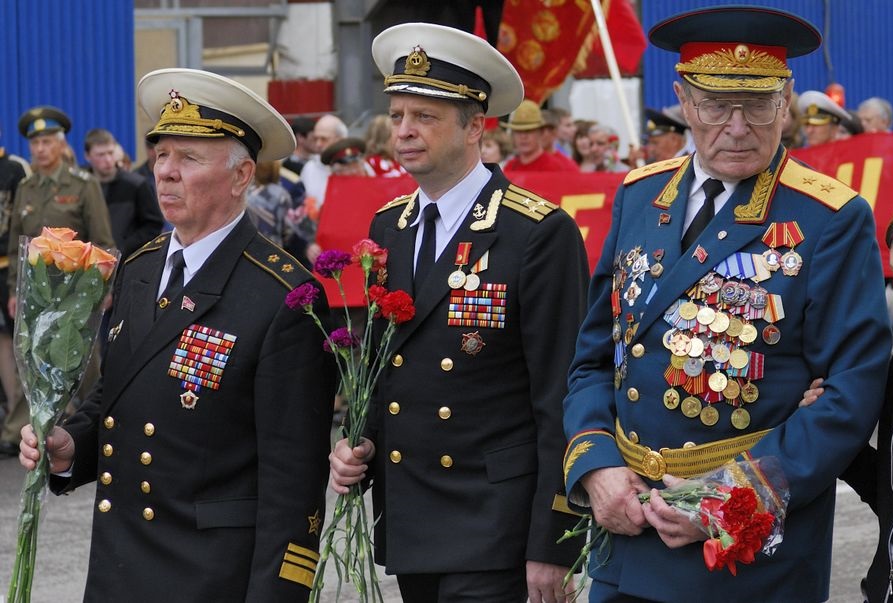
(Photo credit: Wikimedia Commons)