
From Excellence to Scale: Strengthening Belgium’s Semiconductor Ecosystem
When the European Commission adopted in June 2026 the Chips Act 2.0, it proposed a shift in the rules of the game for all actors. Nowhere is this more evident than in the Belgian semiconductor sector, which has become characterised by a mature industry with niche specialities and high dependencies on EU and third-party suppliers and buyers. This made Belgium both a battleground and a player in global technology competition. The semiconductor sector – just as AI, cloud computing, and digital infrastructure – are strongly affected by a bifurcated US-led ecosystem and a China-led ecosystem. Since the 2020s, trends intensified in the EU of thinking about the semiconductor sector in geopolitical terms to reconsider dependencies and vulnerabilities.
This policy brief focuses on Belgium’s position in the semiconductor landscape, and what are the Chips Act 2.0 proposal’s implications. While Belgium plays a crucial role and even became indispensable in some areas of the semiconductor industry, it faces significant structural constraints. These constraints are especially pronounced in smaller yet highly specialised countries like Belgium, whose role in the global value chain is shaped less so by volumes and more by precision knowhow, niche market, IP, R&D, and a level of dependencies in the global value chain.
CLICK “VIEW PDF” BELOW FOR ACCESS TO FULL POLICY BRIEF
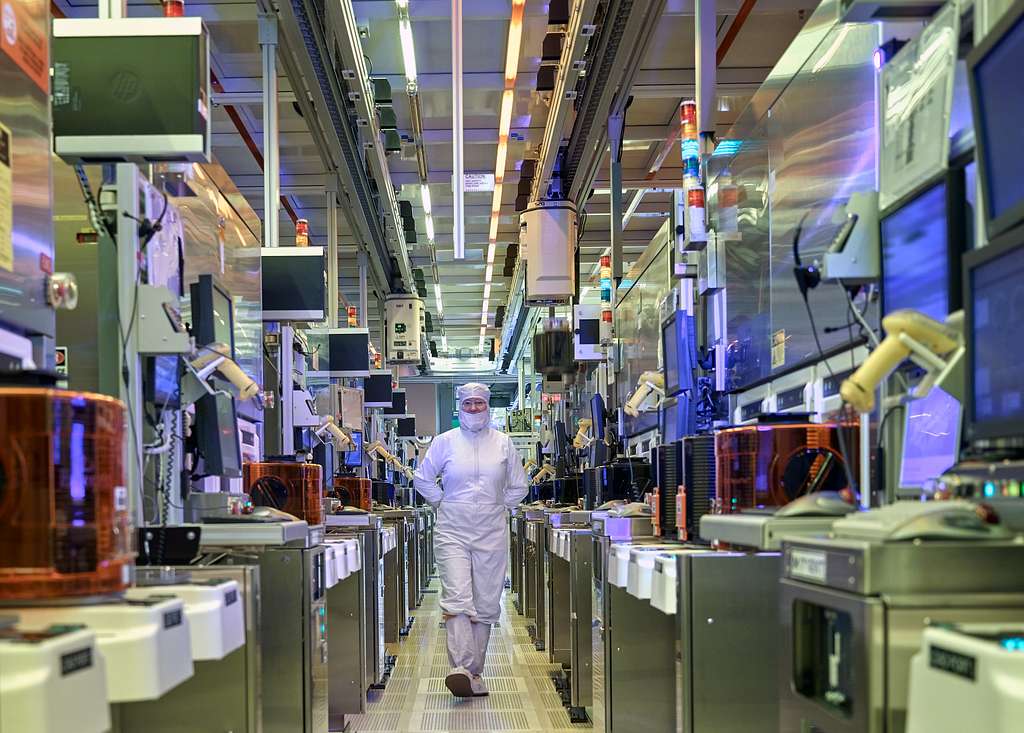
(Photo credit: Carol M. Highsmith Archive, Library of Congress, Prints and Photographs Division.)