
Beyond Lessons Learned: How Russia Institutionalises Battlefield Experience
In
- EU and strategic partners,
- EU strategy and foreign policy,
- Europe in the World,
- European defence / NATO,
- Russia,
Despite persistent weaknesses in leadership, logistics and force quality, the Russian Armed Forces of 2026 are no longer the force that crossed into Ukraine in February 2022. Russia has adapted across counter-battery fire, drone employment, dispersed manoeuvre, electronic warfare and long-range strike. The question is no longer what Russia has learned, but how.
This paper argues that Russia’s most important military innovation since 2022 is neither a weapon nor a tactical concept. It is a hybrid learning system. The formal military-scientific establishment of the Ministry of Defence now operates alongside a wider ecosystem of volunteer organisations, veterans, private developers, military bloggers and research centres, which Russian sources increasingly describe collectively as the People’s Military-Industrial Complex. Together, these actors compress the feedback loop between combat operations and institutional adaptation.
Drawing on Russian doctrinal publications, military-scientific literature and milblogger analysis, the paper distinguishes traditional Lessons Learned procedures from a broader capacity for continuous wartime learning. Observable developments such as FPV drone integration, distributed infantry tactics and integrated long-range strike are best understood as outputs of that system rather than as isolated adaptations. The paper also identifies where the system fails, namely at the political ceiling above which strategic self-correction becomes impossible.
Two further arguments follow. First, military culture explains continuity while military learning explains change. The two are complementary rather than competing, and both are needed to understand contemporary Russian military power. Second, modern warfare is increasingly a competition not between armies, nor between technologies, but between learning systems. The decisive strategic advantage in prolonged war will belong to those armed forces capable of observing, analysing and institutionalising battlefield experience faster than their adversaries. For European militaries, that is the standard against which their own capacity to learn from Ukraine will ultimately be measured.
CLICK “VIEW PDF” BELOW FOR ACCESS TO FULL EGMONT PAPER
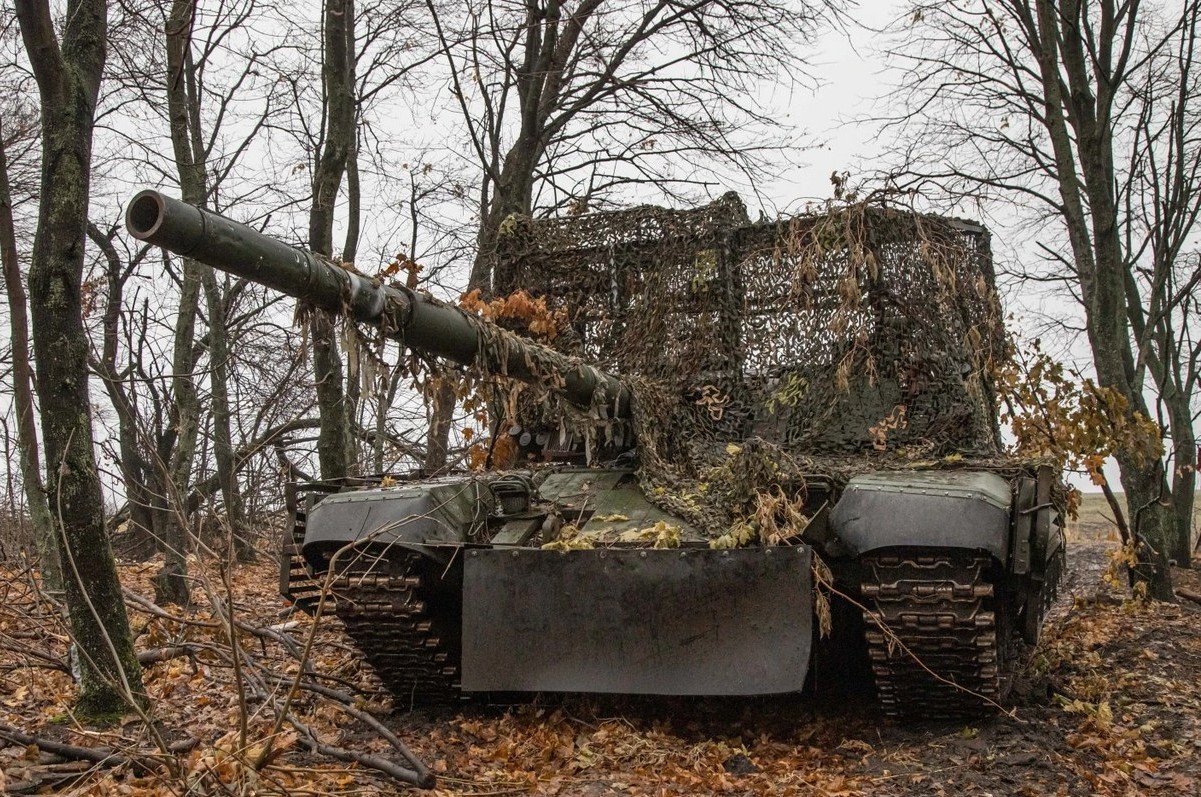
(Photo credit: Wikimedia Commons)