
BRICS and the Price of Consensus
In
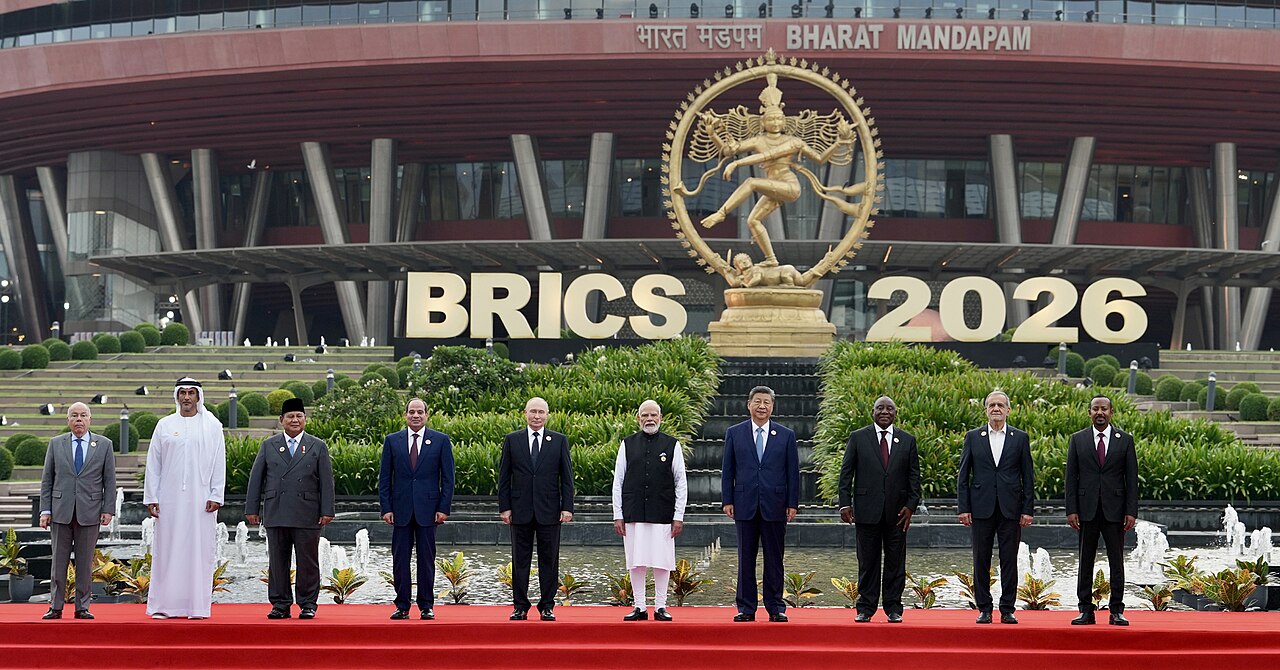
On 12 September, the BRICS leaders adopted a 140-paragraph declaration by consensus. Until 2024, BRICS consisted of five countries: Brazil, Russia, India, China and South Africa. In 2024, Egypt, Ethiopia, Iran and the United Arab Emirates joined, followed by Indonesia in 2025.
BRICS and the Price of Consensus
On 12 September, the BRICS leaders adopted a 140-paragraph declaration by consensus. Until 2024, BRICS consisted of five countries: Brazil, Russia, India, China and South Africa. In 2024, Egypt, Ethiopia, Iran and the United Arab Emirates joined, followed by Indonesia in 2025. Saudi Arabia, invited to join and often listed as a member, has not formally confirmed its accession. Enlargement has given BRICS greater weight, but has made consensus harder.
The New Delhi Declaration gave India’s BRICS chairship a success that two ministerial meetings had failed to deliver. A foreign ministers’ meeting in April 2025 broke down over language on Security Council reform. Egypt and Ethiopia objected to language that appeared to single out South Africa’s aspirations to a permanent seat. In May 2026, another meeting delivered only a chair’s statement. Iran and the United Arab Emirates, on opposing sides of the US-led war on Iran, could not agree on how to describe their involvement. The unanimous adoption of the New Delhi Declaration was widely read as a restoration of cohesion.
But unanimity came at a price. BRICS reached consensus through non-specific language on the most sensitive issues. In an ad hoc joint statement issued in late June 2025, BRICS described the US-Israeli strikes on Iran as a violation of international law and the UN Charter, language later echoed in the Rio de Janeiro Summit Declaration. In New Delhi, however, the declaration limited itself to expressing deep concern. It called for maximum restraint and named neither side.
This was not a drafting failure but the condition for consensus. BRICS can unite against external constraints and around common interests, but struggles when unity would narrow members’ room for manoeuvre.
The New Delhi Declaration reflects this pattern across several areas. On payments, it calls for greater use of local currencies and alternative arrangements to reduce members’ dependence on the dollar. BRICS members have often sought to reduce their vulnerability to US pressure. But the declaration contains no proposal for a common BRICS currency, since the idea remains controversial within the group. The same caution shapes many new institutional initiatives, from the proposed insurance centre to the investment platform. By design, they remain voluntary, non-binding or member-driven. Caution also shapes BRICS’s light institutional design. Without a treaty basis, binding procedures and a permanent secretariat, members can cooperate without relinquishing much sovereignty.
On Security Council reform, where members have competing claims, the declaration recognises African aspirations to greater representation, but does not prejudge which countries should join. On the war on Iran, it restates the Rio de Janeiro declaration’s language on attacks against nuclear facilities under IAEA safeguards, yet refrains from renewing the earlier condemnation of strikes and the call for Security Council action. Ukraine does not appear at all. The Rio de Janeiro Declaration had recalled members’ national positions on the conflict.
The register changes markedly where the declaration turns to measures imposed from outside. It rejects unilateral tariff and non-tariff measures, and sanctions not authorised by the UN Security Council. It reiterates BRICS’s objection to carbon border adjustment mechanisms, describing them as unilateral, punitive, discriminatory and protectionist. It also forcefully defends South Africa’s status as a G20 founding member, following Washington’s decision not to invite the country to the US-hosted G20 summit in December.
BRICS can be specific where agreement enlarges, or at least preserves, all members’ room for manoeuvre. It stays vague where precision would narrow their options.
That does not prevent substantial cooperation. Much of the declaration deals with health, agriculture, energy, industry, science, customs and transport, often through dedicated networks, working groups, platforms and centres of excellence. Cooperation on payments, development finance and artificial intelligence is ongoing and expanding.
The more ambitious initiatives, however, remain limited in their commitments. The declaration sets no timetable, allocates no dedicated resources and names no 2027 deliverables for the New Investment Platform, the proposed Grain Exchange or payment-system interoperability. Agreement in principle is possible because much of the cooperation described is voluntary, technical or still under discussion.
Concern with preserving national discretion also shapes relations within BRICS. Reducing dependence on Washington does not mean accepting greater dependence on Beijing. China accounts for about 60 per cent of BRICS’s GDP at market exchange rates, making it indispensable to the group. For India and some other members, that weight creates a dilemma: they want BRICS to matter, but not to become China-led.
India’s foreign ministry confirmed at the summit that a common BRICS currency is not under consideration. A shared currency would require members to surrender some monetary autonomy within a grouping already heavily weighted towards China. Because BRICS decides by consensus, opposition from one member is enough to prevent agreement.
This logic extends beyond monetary arrangements. In January 2026, South Africa hosted a China-led maritime exercise off Simon’s Town under a “BRICS Plus” label, with vessels from China, Russia, Iran and South Africa, and a single corvette from the United Arab Emirates. Brazil, Egypt, Ethiopia and Indonesia attended as observers. India, as BRICS chair, stayed away and rejected the exercise’s description as an institutional BRICS activity.
BRICS is not the Global South, but in New Delhi, Modi presented it as a vehicle for countries seeking a greater say in global governance. The declaration commits BRICS to voicing Global South concerns and priorities. The programme it sets out is reformist rather than revolutionary. It backs the UN Charter and the UN’s central role, while seeking reform of the Bretton Woods institutions and the WTO rather than their replacement.
When the agenda shifts from broad principles to operational reform, the same constraints reappear. Modi called for ten proposals for global governance reform to be developed into a BRICS Reform Roadmap by the next summit, and for a timetable for Security Council negotiations. The declaration does not take up these operational proposals. It sets out positions on IMF quota realignment, World Bank shareholding reform and restoration of the WTO dispute-settlement system. But it offers no settlement of who gains what, through which mechanism and by when.
For Europe, the question of who gains what is not abstract. In her State of the Union address on 16 September, Commission President von der Leyen said that Europe would always lead in defending the rules-based system, but could no longer rely on it as the only way to secure its interests. In this new world, she said, “we must urgently reimagine our partnerships.” New Delhi shows why. The declaration speaks for some of the largest emerging powers, but pressure for reform extends well beyond them. Three things follow: the reforms concern many of the institutions Europe wants to preserve, the pressure for change comes from countries it needs as partners, and the terms of reform remain unsettled.
(Photo credit: Wikimedia Commons)