
The European Union’s Engagement in Fragile and Conflict Affected Settings: A New Frontier for Belgian Humanitarian Diplomacy
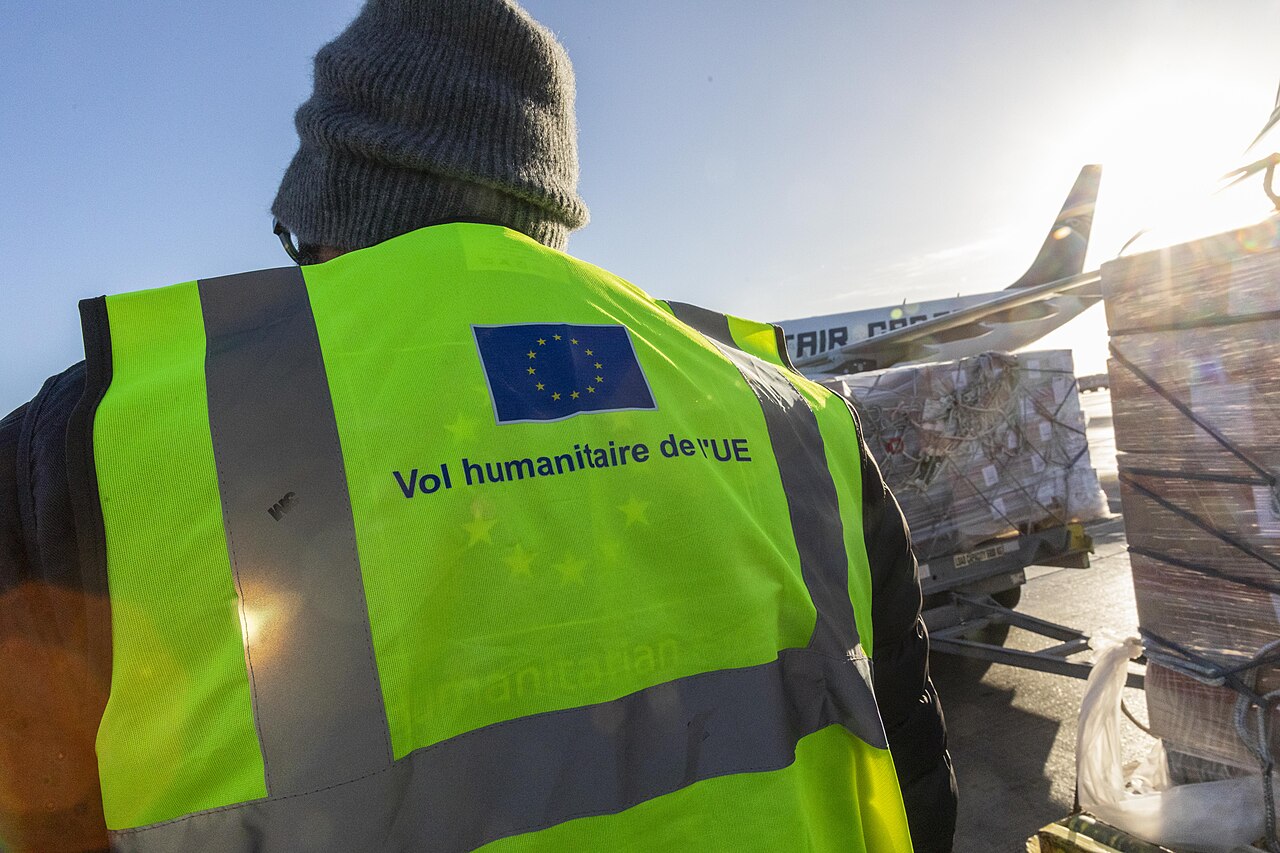
In
Since the turn of the Millennium, the evolving geopolitical landscape and the multiplication of natural disasters related to climate change have had a dramatic impact on humanitarian crises and the capacity of the international community to respond accordingly.
*******
The European Union’s Engagement in Fragile and Conflict Affected Settings: A New Frontier for Belgian Humanitarian Diplomacy
Since the turn of the Millennium, the evolving geopolitical landscape and the multiplication of natural disasters related to climate change have had a dramatic impact on humanitarian crises and the capacity of the international community to respond accordingly.
In this context, the concept of fragility, which was shaped in the 1990s, gained traction and has become a key political focal point.
There are several ways of defining fragility but for the purpose of this contribution, we’ll stick to the basics by referring to a situation where a community face vulnerabilities, shocks or risks that exceed its capacity to prevent and mitigate. While varying definitions can be found in policy documents of international organizations as well as the European Union, the OECD State of Fragility report remains the common reference when it comes to assessing the magnitude of the phenomenon: in a nutshell, out of the 177 contexts analysed in its 2025 report, 61 are identified as experiencing high or extreme fragility, representing around 25% of the world’s population and accounting for 72% of the world’s extreme poor.
Beyond figures, fragile and conflict-affected countries (or situations) are one of the main concerns at the centre of the debate around the future of the aid system and its architecture.
On the one hand, a general downward trend in official development assistance funding has been observed in recent years. The shock of the USAID programme’s cancellation in early 2025 was ultimately only an accelerator, further shaking up a system whose limitations had been abundantly illustrated by the ever-growing imbalance between assessed needs and the estimated resources needed to meet them. There is nowadays a consensus that the multilateral model has reached an inflection point of high-magnitude change and that there is no other option than deep, structural changes. However, neither the Humanitarian Reset, initiated by the Emergency Relief Coordinator, nor the UN80 reform initiative launched by the UN Secretary-General seem to meet these expectations.
On the other hand, this is no longer a cyclical imbalance linked to an increase in emergencies or an alleged over-politicization of priority choices, as was mentioned in the case of Ukraine, but a fundamental structural change observable among all donors: humanitarian and development aid has become secondary to other imperatives stemming mainly from the return of a power politics that was thought to have been consigned to history since the fall of the Berlin Wall. The objectives pursued therefore appear to be increasingly dictated by a logic of interests rather than values, of transactions rather than solidarity. The strategy behind Global Gateway and the general profile of the future Global Europe instrument, proposed as one of the pillars of the next multiannual financial framework, are illustrations of this with regard to the European Union and fit perfectly into this context.
This is why there is a growing need for a new narrative which, while recognizing that international aid is not obsolete, distances itself from charitable or philanthropic discourse that sometimes sounds like neo-colonialism (the donor-recipient relationship) and acknowledges that, like climate change mitigation, security and stability are common goods in which urgent investment is needed.
The handling of situations of fragility is likely to be the main casualty of these developments, caught between humanitarian aid with a limited mandate and development cooperation geared towards other objectives more in line with a logic of investment and partnerships.
The European Commission’s intention, announced at the start of the term of office at the end of 2024 of the team chaired for the second time by Ms. von der Leyen, to present an integrated approach to situations of fragility was therefore welcomed with relief. This commitment will be formalized this year in a communication, which should be followed by Council conclusions consolidating the commitments of the Member States.
Such an integrated approach should not only cover the current emergency, but also provide a framework for implementing the instruments foreseen in the future multiannual financial framework. Inspired by the triple nexus of humanitarian aid, development and peacekeeping, and thus the result of a truly collegial exercise involving all the relevant Commission departments, this communication should reaffirm that a coherent and effective response to conflict and fragility is also a powerful contribution to serving the interests of Europe and Europeans. In strict accordance with the legal basis provided for humanitarian aid in the Treaty (Article 214), it should reiterate that, while remaining based on fundamental principles, humanitarian aid is part of the priorities of the Union’s external relations and is implemented through international cooperation, for which the United Nations is the most appropriate framework. It should also be part of a partnership approach that inspires the external agenda of the von der Leyen 2 Commission, which in this case would translate into massive decentralization and the involvement of local actors.
Expectations are therefore high, as are the risks of failing to meet them. Experience gained from implementing the nexus is mixed, and reconciling the objectives of the various policies and the services that manage them, which is an obvious necessity, will require strong political will and commitment from all stakeholders. The terms of reference of the call for evidence published by the Commission in preparation for this initiative inspires a feeling of déjà vu, far from the hoped-for qualitative leap.
Moreover, this prospect alone will only be reassuring if it is followed up with action. Unfortunately, European integration has a long history of “strategies” being forgotten the day after they are adopted. Unless the actors concerned, or at least some of them, take them seriously. And this is where Belgium can play a role.
By organizing an International Fragility Conference in January 2026 and subsequently presenting a widely welcomed humanitarian strategy, Belgium has taken a leading position that it should exploit by promoting the formation of a “coalition of the willing”. This implicit form of variable geometry, which is increasingly common in the implementation of the European agenda, seems particularly appropriate in the field of humanitarian aid, where Member States’ contributions are very uneven. Furthermore, Belgium could base this approach on the current government’s stated political will to conduct external relations on the basis of coordination between the ‘3Ds’, namely development, defence and diplomacy.
A new chapter is therefore beginning. The challenge is considerable: it will involve addressing situations of fragility for what they are, i.e. primarily a humanitarian issue, while adopting an approach that prioritizes security through resilience and stability. Whether multilateral or multipolar, the future international system will need champions for this cause, and Belgium can be one of them.
(Photo credit: Wikimedia Commons)