
War against Iran: The Birth of a Genuine Geopolitical EU?
In
- Asia-Pacific,
- EU and strategic partners,
- EU institutional affairs,
- EU strategy and foreign policy,
- European Affairs,
- Middle-East / North Africa,
Ignoring inconvenient facts, such as the responsibility of the US and Israel for triggering the war in Iran on 28 February, has a significant impact on the role that Europe can hope to play in resolving this conflict and restoring stability to the region.
*******
War against Iran: The Birth of a Genuine Geopolitical EU?
Ignoring inconvenient facts, such as the responsibility of the US and Israel for triggering the war in Iran on 28 February, has a significant impact on the role that Europe can hope to play in resolving this conflict and restoring stability to the region. The debate at the UN Security Council on 28 February, following the US and Israeli strikes on Iran, highlights this issue. By refusing to cooperate with the US on this war, Pedro Sánchez has offered Europeans a way out and it is promising to see that Europeans have turned out Trump’s call for help in the war he launched against Iran.
European Initial Position on the war in Middle East Detached from Some Inconvenient Facts
At the UN Security Council meeting, which was convened on February 28, only hours after the attacks began, the European delegations – France, Denmark, Greece, Latvia and the United Kingdom – centered their statements on condemning Iran for launching missile strikes across the region and targeting Saudi Arabia, Oman, Jordan, Qatar, Syria, Kuwait, Bahrain and the UAE. They all remained silent on US and Israel’s responsibility for triggering the conflict. To add insult to injury, this omission was reinforced by calls from the same delegations to Iran to ‘negotiate seriously’, despite the fact that negotiations between the United States and Iran were underway at the time of the attacks, reiterating the June 2025 triggering of a war against Iran while negotiations between Washington and Tehran were ongoing.
The joint statement issued by European Council President António Costa and European Commission President Ursula von der Leyen on the same February 28 followed a similar line. Rather than condemning the attacks that triggered the conflict, it called on ‘all parties’ to respect international law.
Respect for international law goes together with respect for international institutions, the first of which is the UN
However, respect for international law is inextricably linked to respect for international institutions and their members.
By silencing inconvenient truths, European delegations not only undermined their own credibility, but also the role of the UN Security Council itself. The Council’s ability to de-escalate conflicts hinges on a shared understanding of the fundamental facts, including who triggered the conflict.
When Others Fill the Diplomatic Space
At that UN Security Council meeting, it was notable that other actors were more fact-based.
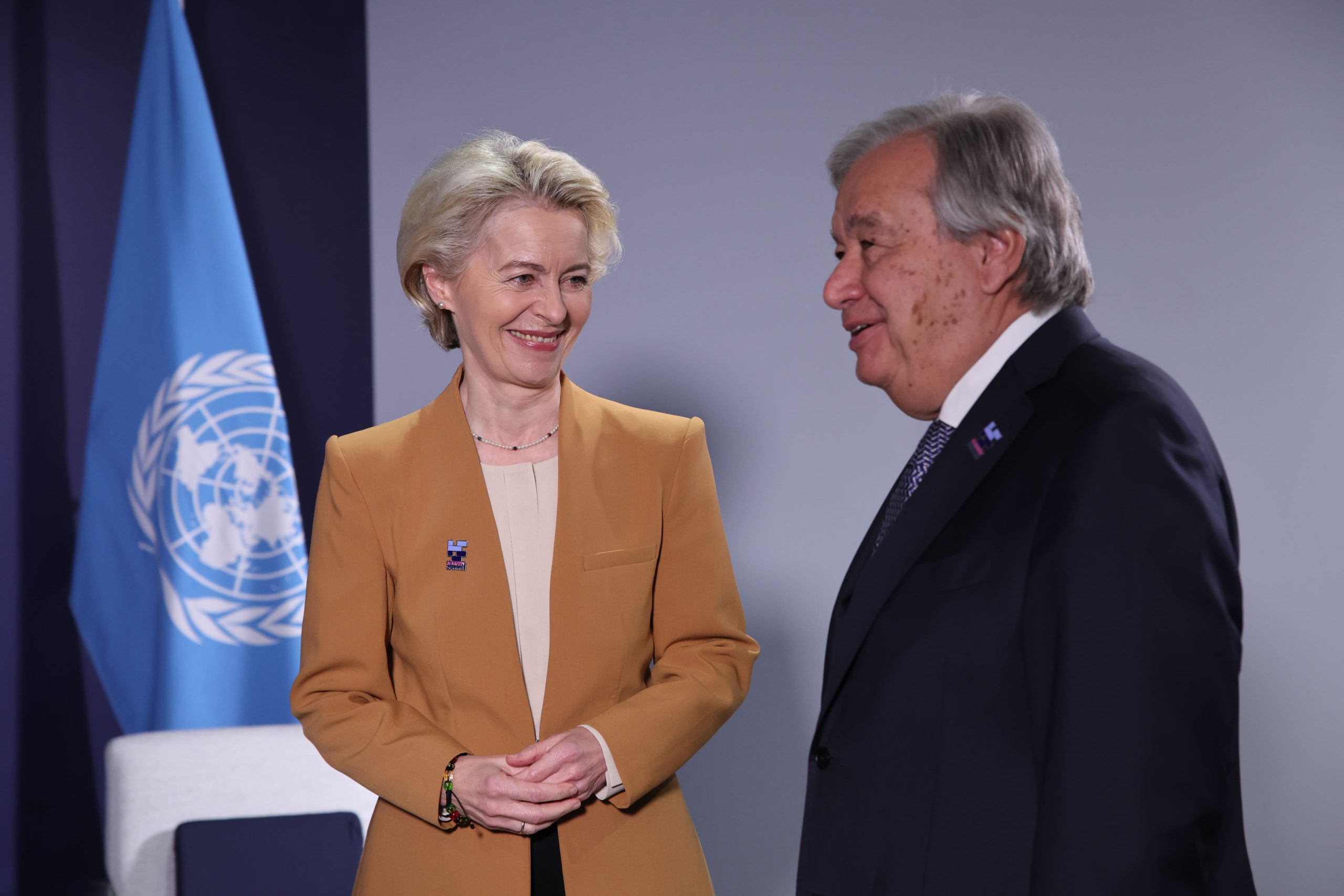
UN Secretary-General António Guterres emphasised the gravity of the situation, condemning the US and Israël for their attack on Iran, and Iran for their retaliatory strikes.
Russia criticised the refusal to title the meeting “Threat to International Peace and Security”, forcing a compromise on the more neutral “Situation in the Middle East.” China called on all parties to “demonstrate sincerity” – diplomatic language suggesting that the current situation lacked precisely that.
These interventions highlight a broader point: when Europe avoids stating obvious facts, others fill the vacuum. And they are the ones gaining trust from the rest of the world.
The Nuclear Question: Another Strategic Blind Spot
Last, and surely not least, European delegations at the UN Security Council reiterated that they cannot “allow” (sic) Iran to acquire nuclear weapons and other weapons of mass destruction. How can these delegations seem to ignore that the current war is the best way to prevent achieving this goal? In his statement dated September 10, 2025, i.e. after the twelve days war, Rafaël Grossi, the Director General of IAEA, confirmed that the war in June 2025 led only to “the inevitable suspension of inspection work in Iran”. But, he praises Iran for resuming cooperation with the Agency “in a respectful and comprehensive way”, and it is his “sincere hope that the resumption of [the] inspection activity in Iran may serve as a good sign, as a reference, an indication that agreements and understandings are possible and that nothing replaces dialogue if one wants durable, lasting solutions to international challenges like this one.”
There again, it is hard to deny that the US and Europeans did not help IAEA to withstand its responsibility and mandate. Going back to the February 28 UN Security Council’s meeting, this brings about a third inconvenient fact, silenced by all European delegations and raised only by the representative of the League of Arab States, who spoke last: that Iran is a signatory of Treaty on the Non-Proliferation of Nuclear Weapons (TNP), while Israel is not, and that Iran took part in the UN conference on the establishment of a Middle East zone free of nuclear weapons and other weapons of mass destruction in November 2019, while Israel did not.
Europe’s Strategic Voice at Stake
European leaders should remember that their words carry weight and their silence is noticed.
When they silence inconvenient facts, they do not hide them. Instead, they undermine Europe’s authority in international affairs and its most important asset: the ability to act as a credible advocate for diplomacy and conflict resolution.
Toward a Genuine European Geostrategic Position
If the EU is to become a genuine geopolitical actor, it must do more than strengthen its defense capabilities.
To those who argue that Europe’s weakness stems from its divisions, I reply that speaking with one voice is not a guarantee for strength. In 2003, for example, when France and Germany refused to join the US-led invasion of Iraq, they ensured an independent European geopolitical stance, even if this took the form of a disagreement between Europeans. Today, Pedro Sánchez, by being the first to refuse joining forces with the US against Iran paved the way for Kaja Kallas’ declaration that the war in Iran is not Europe’s war, and for EU’s stated preference of a negotiated settlement with Iran to put an end to the blockade of the strait of Hormuz.
This shows that dissent among Europeans can be a fertile ground for maturing a sound geopolitical position.
Yet, this does not prevent zig-zagging, as the last European Council unfortunately suggests. Despite Europeans’ refusal to join Trump in his war, the European Council Conclusions follow the early denial stance, failing again to condemn the US and Israel for triggering this war against Iran, while calling on “Iran and its proxies to immediately cease these attacks and respect the sovereignty and territorial integrity of countries in the region, in line with UN Security Council Resolution (UNSCR) 2817, which should be fully implemented.”
To grow from their differences, Europeans should speed up in developing a geopolitical “selbstdenken”, away from the automatisms acquired since the end of WWII.
(Photo credit: Wikimedia Commons)