
Trump & Xi: A Balance of Power and Vulnerability
In
- Asia-Pacific,
- China,
- EU and strategic partners,
- EU strategy and foreign policy,
- Europe in the World,
The United States and China are now evenly matched as great powers. Given where China is coming from, that can be seen as a gain for China.
*******
Trump & Xi: A Balance of Power and Vulnerability
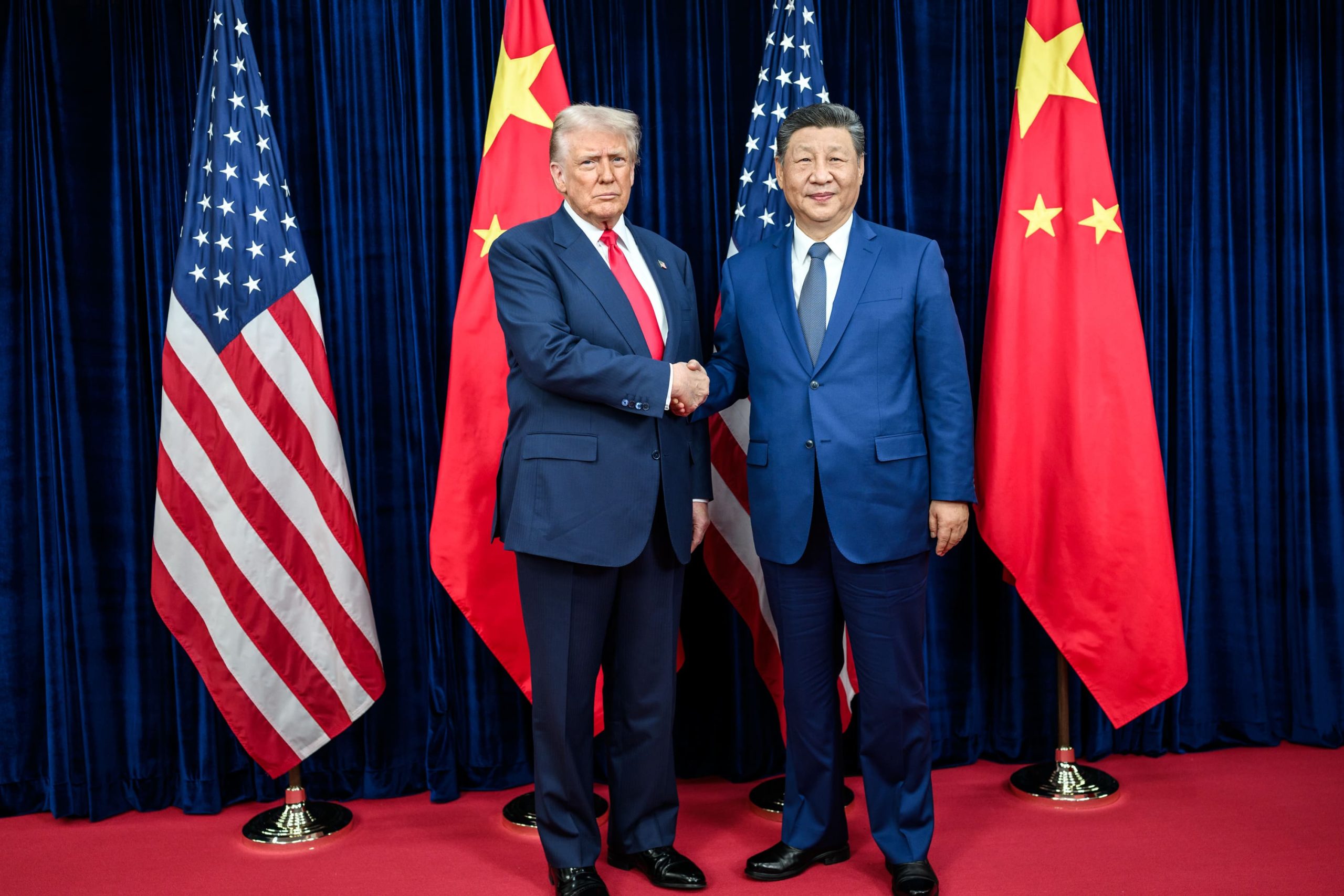
The United States and China are now evenly matched as great powers. Given where China is coming from, that can be seen as a gain for China. An impression that is strengthened by US President Donald Trump’s meek behaviour during last week’s meeting with his Chinese counterpart Xi Jinping. But the main conclusion of the summit is this: neither power can impose its will on the other. Each could cause the other a lot of pain, but each would suffer greatly in return. Their power and their vulnerabilities produce a precarious balance that, for now at least, Washington and Beijing seem set to manage.
Stability, however fragile, is better for Europe and the world than a confrontation course, which can only lead to mutual economic destruction, or worse. As such, while the summit did not produce much concrete progress in Sino-American relations, this fragile consensus is not bad news.
But it does not increase the chance of improved Sino-European relations either. Indeed, whereas earlier the US was often putting pressure on Europe to make common cause against China, Washington no longer seems to have much interest in trying to alter the economic balance in cooperation with Europe. Instead, the EU is grappling with a very aggressive American economic policy as well. Brussels will have to look to unilateral measures first, before it can set out to convince China of the need for a renegotiation of their economic relations.
Cancelling each other out
Xi’s strong statement on Taiwan dominated the headlines: the most important issue in Sino-American relations which, if mishandled, could lead to conflict, so he said. Trump responded, after the summit, by stating that the US would not travel 9,500 miles to fight a war if Taiwan would declare independence, and that he has yet to decide whether to go ahead with a $14 billion package of arms sales to the island. The latter is a break with established US policy since 1982, when President Ronald Reagan assured Taiwan that he would not consult the People’s Republic in advance over arms sales.
At the same time, Trump also made it clear, though, that he had declined to answer Xi’s direct question whether the US would defend Taiwan or not, while Secretary of State Marco Rubio emphasised (and perhaps felt obliged to) that US policy on Taiwan has not changed. Strategic ambiguity remains the order of the day. What this means is that, for now, everyone holds to the status quo and is warning off all other parties, including Taiwan itself, not to unilaterally disturb it. The status quo is, effectively, the most Taiwan can hope for. Not messing with it will require a lot of discipline from all sides.
Having thus evacuated the Taiwan issue, China and the US could only conclude that in various areas, their instruments of power cancel each other out.
Through its blockade of the Strait of Hormuz, the US can control all shipping going into and coming out of the Gulf, including to and from China – in theory. For what would happen if, in practice, the US Navy seized a Chinese vessel? On the other hand, China may have been content, until now, to watch the US getting entangled in a pointless war. But the longer the current stalemate lasts, the more the Chinese economy too will suffer. Eventually, China has no choice but to use its influence over Iran to help bring the war to an end. The US blockade may serve another purpose, however: deterrence. Washington has demonstrated that if Beijing were ever to attempt a blockade of Taiwan, it could retaliate very effectively without deploying a single additional ship to East Asia.
As in politico-military matters, so in the economy: if in one area one side has leverage, then the other holds the cards in another. Tariffs or advanced semi-conductors versus rare earths and pharmaceuticals, to name just a few. In domestic politics too, both leaders, mutatis mutandis, face similar challenges: the midterms in the US in November 2026, the next party congress of the CCP about a year later.
An academic is happy when participation in a conference leads to an invitation to the next. And so Trump’s state visit will be followed by Xi’s return visit in September. This is important: even if few concrete agreements can be sealed, keeping the summitry going is indispensable to manage the precarious balance and prevent escalation in any field (and there are actors on both sides who want to see just that).
And Europe?
Does all of this amount to a China strategy on the part of the US? Can the US have any consistent strategy while Trump is president? Trump does seem to have the right instinct, though: just as he wants a big and beautiful deal with Russia, so he wants one with China. The challenge is to stop him from making unacceptable concessions to achieve it.
Does Europe have a China strategy? The answer is not that clear either. The last EU-China summit, in July 2025, was a failure, and the Sino-European economic relationship remains totally out of balance. Chinese intransigence definitely plays a role: behind a façade of friendliness hides an unwillingness to recognise that there is even an issue to be discussed. But does the EU really have a clear enough idea of its desired end-state for economic relations with China? New measures such as the Industrial Accelerator Act may provide the answer, but have then to be translated into a negotiating strategy towards China. Meanwhile, China has already forbidden its citizens and companies to cooperate with the EU’s anti-subsidy investigation into Nuctech, a Chinese manufacturer of security scanners, and is threatening further retaliation. Potential concessions, on the contrary, do not seem to be on Beijing’s agenda.
China may consider any concessions to Europe unnecessary as long as it feels that its relations with the US can be managed satisfactorily, and may not care enough for President Xi to travel to Brussels himself for a next EU-China summit. Beijing must understand, however, that in Sino-European relations, the status quo is not an option because it is, in fact, a strongly downward slope. One may stand firm on it for a while, but eventually one will start sliding down.
Prof. Dr Sven Biscop lectures at Ghent University and is the acting Director-General of Egmont. He is looking forward to his own “summitry” in Beijing this summer, teaching his annual summer course at Renmin University and meeting his colleagues in the Chinese think-tanks. Sven warmly thanks his Egmont colleagues Victor De Decker, Dr Jasper Roctus, and Bernard Siman for their feedback on the first draft of this paper.
(Photo credit: Wikimedia Commons)